

Table of Contents
Toggle
Search Engine Optimization has evolved dramatically over the past decade. Understanding the different types of SEO is no longer optional for anyone serious about online visibility and digital marketing success. Google now uses sophisticated algorithms that evaluate websites across multiple dimensions, making it essential to master various SEO approaches to achieve and maintain high rankings.
SEO, or Search Engine Optimization, is the practice of improving a website’s visibility in search engine results pages. The goal is to attract organic traffic by ranking higher for relevant search queries.
Relying on a single SEO approach no longer works. Google’s ranking system has become more complex, evaluating websites based on Experience, Expertise, Authoritativeness, and Trustworthiness (EEAT), user experience signals, artificial intelligence understanding, and search intent matching.
This guide is designed for bloggers looking to grow their audience, businesses aiming to increase online visibility, digital marketing students building foundational knowledge, and anyone wanting to understand how search engines rank content.
What Are the Different Types of SEO?
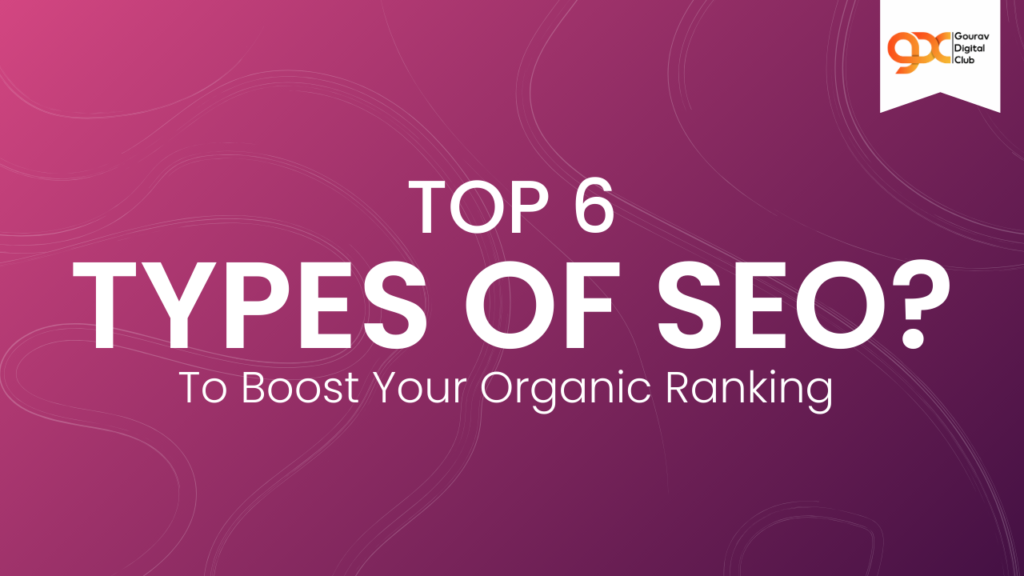
There are six primary types of SEO that work together to improve search rankings. These include on-page SEO, off-page SEO, technical SEO, local SEO, content SEO, and mobile/UX SEO.
Each type addresses different aspects of website optimization. On-page SEO focuses on content and HTML elements, off-page SEO builds external authority, and technical SEO ensures proper website functionality. Together, these create a comprehensive SEO ecosystem.
The fundamental difference lies in where the optimization happens. On-page SEO involves changes made directly on the website, off-page SEO includes activities outside the website, and technical SEO deals with backend infrastructure and performance.
1: On-Page SEO (Content That Google Understands)
On-page SEO involves optimizing individual web pages to rank higher and earn more relevant traffic. This includes both the content and the HTML source code.
Keyword Research & Search Intent
Keyword research forms the foundation of on-page SEO. The process involves identifying terms and phrases that potential visitors use when searching. Understanding search intent—whether informational, navigational, commercial, or transactional—ensures content matches what searchers actually want.
Title Tags & Meta Descriptions
Title tags appear as clickable headlines in search results. They should be concise, include the primary keyword, and accurately describe the page content. Meta descriptions, while not a direct ranking factor, influence click-through rates by providing a compelling summary of the page.
Heading Structure
Proper heading hierarchy (H1 through H6) helps both users and search engines understand content organization. The H1 tag should contain the main topic, while H2 and H3 tags break content into logical sections and subsections.
Internal Linking Strategy
Internal links connect pages within the same website. They distribute page authority, help search engines discover new pages, establish site architecture, and keep visitors engaged longer.
Content Freshness & Readability
Google favors recently updated content for time-sensitive queries. Readability matters equally—content should be clear, well-organized, and easy to consume. Short paragraphs, simple language, and logical flow improve both user experience and rankings.
Image SEO
Images need optimization through descriptive alt text for accessibility and SEO, file compression for faster loading, and descriptive file names that indicate image content
On-Page SEO
Always conduct thorough keyword research before writing. Place primary keywords in title tags, first paragraph, and one or two headings naturally. Use semantic keywords and related terms throughout. Optimize meta descriptions to improve click-through rates. Ensure mobile responsiveness across all devices. Include internal links to related content.
Common mistakes include keyword stuffing that makes content unreadable, duplicate title tags across multiple pages, missing or poorly written meta descriptions, thin content that provides little value, and broken internal links.
2: Off-Page SEO (Building Trust & Authority)
Off-page SEO encompasses all activities performed outside the website to improve search rankings. The primary focus is building website authority and trustworthiness through external signals.
Backlinks Explained
Backlinks are links from other websites pointing to a particular site. Quality matters more than quantity. A single link from a highly authoritative site carries more weight than dozens of links from low-quality sources. Google evaluates backlinks based on the linking site’s authority, relevance to the content, anchor text used, and link placement.
Link Building Methods That Work in 2026
Effective link building strategies include creating high-quality, shareable content that naturally attracts links, guest posting on reputable industry websites, digital PR to earn media coverage, broken link building by finding and replacing dead links, and resource page link building.
Brand Mentions & Citations
Even without hyperlinks, brand mentions signal relevance and authority to Google. Citations—references to business name, address, and phone number—particularly matter for local businesses.
Social Signals & PR Links
While social media shares aren’t direct ranking factors, they increase content visibility and can lead to natural backlinks. Public relations efforts that result in news coverage from authoritative sources provide valuable backlinks.
Spam Links & Google Penalties
Low-quality backlinks from spammy websites, paid links that violate Google guidelines, and link schemes can trigger penalties. Regular backlink audits and disavowing toxic links protect site health.
How to Earn Natural Backlinks
Focus on creating exceptional content that solves real problems. Conduct original research and publish data that others will reference. Build relationships with industry influencers and journalists. Offer expert insights for relevant publications. Monitor brand mentions and request links when appropriate.
3: Technical SEO (Website Health & Performance)
Technical SEO ensures search engines can crawl, index, and understand a website effectively. This foundation supports all other SEO efforts.
Website Crawlability & Indexing
Search engines use bots to crawl websites and add pages to their index. Technical issues can prevent proper crawling. Robots.txt files tell crawlers which pages to access, while XML sitemaps provide a roadmap of important pages.
Core Web Vitals
Google’s Core Web Vitals measure user experience through three metrics. Largest Contentful Paint (LCP) measures loading performance and should occur within 2.5 seconds. Interaction to Next Paint (INP) measures responsiveness to user interactions. Cumulative Layout Shift (CLS) measures visual stability.
Mobile-First Indexing
Google predominantly uses the mobile version of content for indexing and ranking. Websites must perform well on mobile devices with responsive design, fast loading times, and easy navigation.
HTTPS & Security
Secure websites using HTTPS encryption rank better than non-secure HTTP sites. SSL certificates protect user data and build trust.
Duplicate Content & Canonical Tags
Duplicate content confuses search engines about which version to rank. Canonical tags indicate the preferred version when similar content exists across multiple URLs.
Essential Technical SEO Tools
Google Search Console monitors website health, identifies indexing issues, and shows search performance data. PageSpeed Insights analyzes loading speed and provides optimization suggestions. Both tools are free and essential for technical SEO maintenance.
4: Local SEO (For Location-Based Rankings)
Local SEO optimizes online presence to attract customers from relevant local searches. This matters enormously for businesses serving specific geographic areas.
Google Business Profile Optimization
A complete and optimized Google Business Profile is fundamental to local SEO. This includes accurate business information, selected business categories, high-quality photos, regular posts and updates, and prompt responses to customer reviews.
Local Keyword Targeting
Local keywords include geographic modifiers. Instead of just “plumber,” target “plumber in Chicago” or “emergency plumber near downtown Seattle.” These phrases match how people search for local services.
NAP Consistency
NAP stands for Name, Address, and Phone number. Consistent NAP information across all online platforms—website, directories, social media—signals legitimacy to Google.
Local Citations
Listings in local business directories, industry-specific directories, and review platforms build local authority. Quality directories include Yelp, Yellow Pages, and niche-specific platforms.
Reviews & Ratings
Customer reviews significantly impact local rankings. Encourage satisfied customers to leave reviews, respond professionally to all reviews, and address negative feedback constructively.
Map Pack Ranking Factors
The local “map pack” displays three businesses for location-based queries. Ranking factors include proximity to the searcher, relevance to the query, and prominence based on reviews and citations.
Who Needs Local SEO
Service businesses like plumbers, electricians, and contractors benefit greatly. Local retail stores, restaurants, and medical practices rely on local search visibility. Educational institutions, real estate agencies, and legal firms serving specific areas need strong local SEO.
5: Content SEO (Ranking Through Value & Relevance)
Content SEO focuses on creating, optimizing, and managing content that ranks well and provides genuine value to readers.
Content vs Keyword Stuffing
Modern content SEO prioritizes user value over keyword density. Content should naturally incorporate keywords while remaining readable and informative. Keyword stuffing—unnaturally repeating keywords—hurts both user experience and rankings.
Topic Clusters & Pillar Pages
Topic clusters organize content around central themes. A pillar page covers a broad topic comprehensively, while cluster content addresses specific subtopics in depth. Internal links connect these pieces, signaling topical authority to search engines.
Blog SEO vs Landing Page SEO
Blog posts typically target informational keywords and aim to educate readers. Landing pages target commercial or transactional keywords and drive conversions. Each requires different optimization approaches.
EEAT (Experience, Expertise, Authority, Trust)
Google emphasizes content created by knowledgeable authors with relevant experience. Demonstrating expertise through credentials, citing authoritative sources, maintaining accurate information, and building trust through transparency improves rankings.
Content Update & Pruning Strategy
Regularly updating existing content maintains relevance. Pruning involves removing or consolidating thin, outdated, or underperforming content to improve overall site quality.
Content SEO Examples
Educational blog posts answering common questions, comprehensive guides covering topics thoroughly, FAQ sections addressing specific concerns, case studies demonstrating real-world results, and comparison articles helping decision-making all exemplify effective content SEO.
6: Mobile & UX SEO (User Experience = Rankings)
User experience directly influences rankings. Google prioritizes websites that provide excellent experiences across all devices.
Mobile Responsiveness
Websites must adapt seamlessly to different screen sizes. Responsive design ensures proper display on smartphones, tablets, and desktops without requiring separate mobile versions.
Page Layout & Readability
Clean layouts with adequate white space, readable font sizes, clear visual hierarchy, and logical content organization improve user experience. Avoid intrusive interstitials and excessive ads.
Bounce Rate & Dwell Time
Bounce rate measures the percentage of visitors leaving after viewing one page. Dwell time tracks how long visitors stay. High bounce rates and low dwell times signal poor user experience.
CTA Placement
Call-to-action elements should be visible but not disruptive. Strategic placement guides users without frustrating them with constant prompts.
Navigation Structure
Intuitive navigation helps users find information quickly. Clear menus, logical categories, breadcrumb navigation, and search functionality enhance usability.
Why UX SEO Matters
Google’s ranking system prioritizes user satisfaction. Websites that provide positive experiences earn better rankings, more engagement, and higher conversion rates. User-first design aligns with Google’s core philosophy.
How These 6 Types of SEO Work Together
SEO success requires integrating all six types into a cohesive strategy. Technical SEO creates the foundation, on-page SEO makes content discoverable, off-page SEO builds authority, content SEO provides value, local SEO captures geographic traffic, and UX SEO ensures visitor satisfaction.
Consider an example: a local bakery website needs technical SEO for proper indexing, on-page SEO for product descriptions, local SEO for geographic visibility, content SEO for blog recipes, off-page SEO for food blogger mentions, and UX SEO for mobile ordering functionality.
Ignoring any single type creates vulnerabilities. Excellent content without technical SEO won’t be crawled properly. Strong backlinks without good UX lead to high bounce rates. Local citations without mobile optimization miss smartphone searchers.
SEO Checklist: Apply All 6 SEO Types Effectively
Beginner-Friendly Steps : Fix basic technical issues using Google Search Console. Optimize existing pages with proper title tags and meta descriptions. Create high-quality content targeting specific keywords. Claim and optimize Google Business Profile. Build internal links between related pages. Ensure mobile responsiveness.
Advanced Tips for Competitive Niches: Conduct comprehensive competitor backlink analysis. Develop topic cluster content strategies. Implement advanced schema markup. Build relationships for digital PR opportunities. Optimize for featured snippets. Monitor and improve Core Web Vitals continuously.
Common SEO Mistakes That Stop Ranking
Focusing Only on Keywords: Keyword optimization alone doesn’t guarantee rankings. User intent, content quality, and overall experience matter equally.
Ignoring Technical SEO: Backend issues like slow loading speeds, crawl errors, and mobile problems undermine all other efforts.
Buying Low-Quality Backlinks : Purchased links from link farms or irrelevant sites trigger penalties and damage long-term rankings.
Thin or Duplicate Content : Pages with minimal value or copied content fail to rank and may incur penalties.
Poor Mobile Experience :With mobile-first indexing, inadequate mobile optimization severely limits visibility.
FAQs About Types of SEO
1 . How many types of SEO are there?
There are six primary types of SEO: on-page, off-page, technical, local, content, and mobile/UX SEO.
2.Which SEO type is most important?
No single type is most important. Technical SEO provides the foundation, but all six types must work together for optimal results.
3.Can a website rank without technical SEO?
Poor technical SEO severely limits ranking potential regardless of content quality. Search engines must be able to crawl and index pages effectively.
4.How long does SEO take to show results?
Results typically appear within 3-6 months for new efforts. Competitive keywords may take longer, while low-competition terms might rank faster.
Conclusion: Which Type of SEO Should Be the Starting Point
Beginners should start with on-page SEO and basic technical fixes. These provide the foundation and deliver relatively quick improvements without requiring advanced digital marketing skills or resources.
Business websites should prioritize technical SEO first to ensure proper functionality, then layer in on-page optimization and local SEO for geographic targeting.
Long-term SEO success requires consistency across all six types. Search engine algorithms continuously evolve, making ongoing optimization essential. Rather than seeking shortcuts, focus on sustainable practices that build genuine value for users while satisfying search engine requirements.
The most effective approach combines patience with persistent effort across multiple SEO dimensions. Start with fundamentals, expand systematically, and maintain focus on creating genuinely helpful content that serves audience needs.